

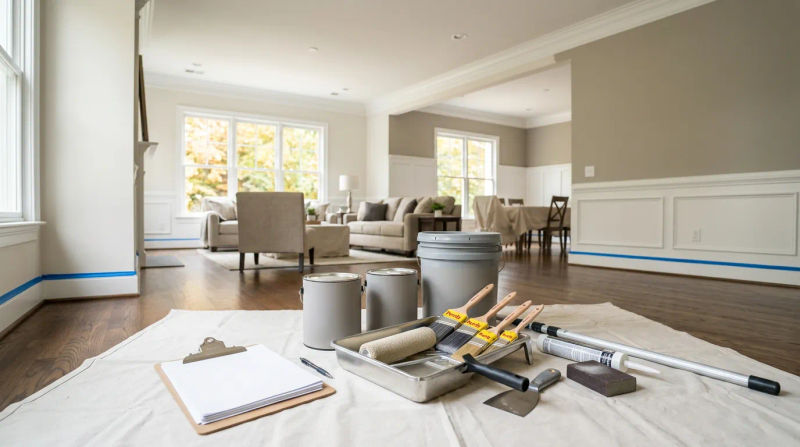
As a paint and finish specialist with over 12 years of experience in the Atlanta area, I know that the first question on every homeowner's mind is, "What is this going to cost?" It's a fair question, and getting a clear answer can be tough. My goal here is to give you a transparent look at the interior painting cost Sandy Springs homeowners can expect, so you can budget with confidence.
With summer travel behind us and the holidays on the horizon, early fall is the perfect time to refresh your home's interior. Planning now ensures your space is ready for guests. This guide will walk you through typical costs, the factors that influence them, and how to get the most value for your investment.
Average Costs in Sandy Springs
Predicting the exact cost to paint house interior 2026 can be tricky because every home is unique. However, we can provide some realistic ranges based on our experience working in Sandy Springs. Homes here vary from classic 1950s and 1960s ranch-style houses to newer constructions with soaring ceilings, and the price reflects that diversity.
Here are a few ways professional painters typically estimate costs:
- Price Per Room: For a standard 12x12-foot room with 8-foot ceilings, you can generally expect the interior painter price per room Georgia to fall between $450 and $900. This range typically includes labor and materials for painting the walls. Ceilings, trim, and doors would be additional.
- Price Per Square Foot (of Wall Space): This is a more precise method. Most professional crews in the Sandy Springs area charge between $3.00 and $6.00 per square foot of paintable wall surface. The final price depends heavily on the condition of the walls and the complexity of the job.
- Whole-House Project: For a full interior repaint of a typical 1,800-square-foot ranch home common in this area, costs could range from $7,000 to $12,000+. This is a broad estimate that can increase based on the number of doors, closets, trim details, and the amount of prep work required.
Factors That Affect Price
The final number on your estimate is determined by more than just the size of your rooms. As a specialist, I can tell you that the details are what truly define the scope of a project. Here’s what our technicians look for when building a quote.
- Surface Preparation: This is the single most important factor for a lasting finish, especially in the many charming 1950s and 60s homes in Sandy Springs. These properties may have old plaster with hairline cracks, settled drywall, or layers of old paint. Extensive prep work - such as sanding uneven textures, patching nail pops, repairing drywall, and priming over stains - is labor-intensive but non-negotiable for a quality result.
- Scope of Work: Are we just painting the walls? Or does the project include ceilings, trim, baseboards, doors, and window frames? Each additional element adds to the labor and material costs. Intricate details like crown molding, wainscoting, or built-in bookshelves require meticulous cutting-in, which takes significant time and skill.
- Room Height and Layout: A room with 8-foot ceilings is straightforward. A two-story foyer or a great room with 18-foot vaulted ceilings requires specialized equipment like scaffolding and extension ladders, which increases labor time and safety considerations.
- Color and Paint Sheen: A dramatic color change, like going from a dark navy to a light beige, will almost certainly require a primer coat and multiple top coats to achieve full coverage. This increases both labor and material costs. Similarly, using different sheens (e.g., eggshell on walls, semi-gloss on trim) requires more care and time than using one finish throughout.
- Quality of Materials: The cost of paint itself can vary widely. While it might be tempting to opt for a cheaper can of paint, premium paints offer better coverage, durability, and washability. They adhere better and resist scuffs, saving you money on touch-ups and repainting down the road. We always help clients choose the right product for their needs, balancing budget with long-term performance.
- Furniture and Home Protection: A professional crew will spend significant time protecting your home. This involves moving heavy furniture to the center of the room, covering it with plastic, and laying down drop cloths on all flooring. An empty house is much faster to paint than one filled with furniture and belongings.
How to Get the Best Value
Getting the best value doesn’t mean finding the cheapest price. It means investing in a high-quality job that will look great for years. Here are a few tips to manage your interior painting cost without sacrificing quality.
- Bundle Your Projects: If you’re thinking about painting one or two rooms, consider adding others. Painting multiple rooms at once is more efficient for a painting crew. Once our team is on-site with all their equipment, adding another room is more cost-effective than scheduling a separate project later.
- Handle Minor Prep Yourself: You can save on labor costs by handling simple tasks like moving decor, clearing out closets, and taking down curtains. If you're comfortable, you can even fill small nail holes with spackle. However, I'd recommend leaving significant drywall repairs or complex sanding to the professionals to ensure a flawless finish.
- Be Strategic with Color: Sticking within the same color family can sometimes reduce the number of coats needed. If your budget is tight, consider using a bold, expensive color for an accent wall rather than an entire room.
- Prioritize High-Traffic Areas: If a full-home repaint isn't in the budget, focus on the areas that see the most use, like the entryway, kitchen, and living room. A fresh coat of paint in these spaces can make the whole house feel renewed.
Questions to Ask Your Contractor
Choosing the right contractor is crucial. A detailed estimate and clear communication are signs of a professional operation. Before you sign a contract, be sure to ask these questions:
- Are you fully licensed and insured? This protects you and your property in case of accidents.
- Can you provide a detailed, itemized quote? The quote should specify the areas to be painted, the exact prep work included, the brand and type of paint to be used, and the number of coats.
- What is your process for surface preparation? A good painter will be happy to explain their process for cleaning, sanding, and priming.
- How will you protect my home, floors, and furniture?
- Who will be performing the work, and what is their experience level? At professional companies like Platinum Painting concepts, we rely on trained, organized crews who follow standardized processes.
- What is the estimated timeline for the project?
Understanding the answers to these questions will help you accurately compare bids and choose a reliable partner for your project.
Refreshing your home’s interior is one of the most impactful upgrades you can make. By understanding the factors that drive interior painting cost in Sandy Springs, you can plan effectively and make informed decisions. A professional paint job is an investment in your home's beauty and longevity.
For a personalized estimate in Sandy Springs, contact Platinum Painting concepts for a free consultation.