

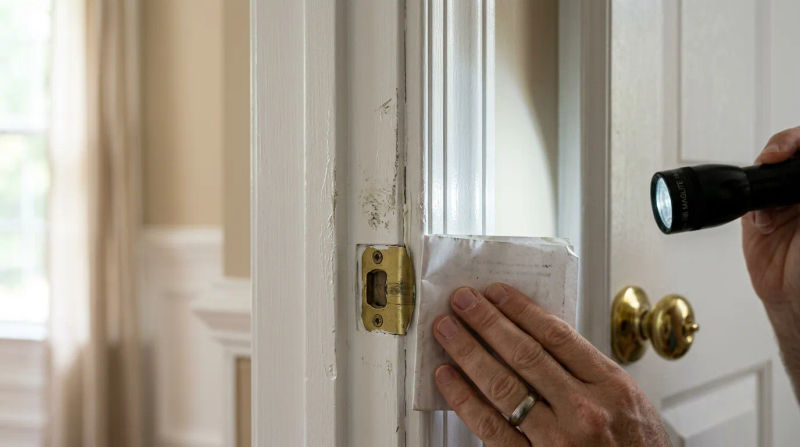
It’s a scenario we see often. You’ve just invested in a beautiful, fresh coat of paint for your home’s interior. The trim looks crisp, the walls are flawless, and the doors have a smooth, perfect finish. For a few days, everything is wonderful. Then, you go to open the bedroom door and hear it: a distinct pop. The door, which previously swung freely, now resists for a moment before pulling away from the frame, sometimes taking a tiny fleck of paint with it. This frustrating issue of doors sticking after painting is especially common here in Georgia, and it can quickly mar the satisfaction of a newly updated space.
As a specialist who has spent over a decade working with paint and finishes, I’ve seen this problem arise time and again, particularly during certain times of the year. Understanding why it happens is the first step toward preventing and fixing it. The good news is that it’s almost always a solvable problem, but the solution depends on the root cause.
Common Signs and Symptoms
Sticking doors can manifest in a few different ways, ranging from a minor annoyance to a problem that causes real damage to your new paint job. When our technicians are called out to diagnose this issue, these are the signs we look for. You might notice one or more of the following:
- An Audible "Pop" or Tearing Sound: This is the most common sign. It’s the sound of the paint film on the door breaking its bond with the paint film on the door jamb. It's a clear indicator that the surfaces are adhering to each other when closed.
- Paint Transfer: When you inspect the edge of the door and the corresponding spot on the frame, you may see that paint has transferred from one surface to the other. This leaves a patchy, damaged appearance.
- A Gummy or Tacky Feel: The surface of the door or trim might feel slightly sticky or soft to the touch, even days or weeks after painting. This is a tell-tale sign of tacky paint on interior doors Georgia homeowners often struggle with, especially in humid weather.
- Visible Scuffs or Indentations: The pressure of the door closing against the frame can leave permanent marks or lines in a paint job that hasn't fully hardened, ruining that smooth, professional finish.
- Physical Resistance: In more severe cases, the door may become genuinely difficult to open or close, requiring a firm tug or push. This indicates a significant bond has formed between the two painted surfaces.
What Causes This Problem
While it seems like a simple issue, the problem of doors sticking after painting Milton residents experience often stems from a combination of environmental factors and application techniques. Here are the primary culprits we identify on the job.
1. Humidity and Cure Time
This is, without a doubt, the number one cause, especially in our region. Paint undergoes two processes: drying and curing. Drying is the evaporation of the liquid solvent (like water in latex paint), which happens relatively quickly and makes the paint feel dry to the touch. Curing, however, is a chemical process where the paint molecules cross-link to form a hard, durable film. This process takes much longer.
So, how long for paint to cure in humidity? During a dry spell, a quality acrylic enamel might cure in about 7-14 days. But during the late hurricane season in September, when Milton experiences frequent rain and sustained high humidity, that cure time can stretch to 30 days or even longer. When a door is closed before the paint has fully cured, the two soft surfaces press together and essentially fuse, a phenomenon known as “blocking.”
2. Excessive Paint Thickness
Every layer of paint adds to the total thickness on the door and frame. If paint is applied too heavily, or if a new coat is added over many old ones without proper sanding, it can eliminate the small gap that allows the door to operate freely. Even a fraction of a millimeter can be enough to cause contact and sticking. Our crews are trained to assess this clearance before painting and sand down high-build areas to maintain proper function.
3. Improper Product Selection
Not all paints are suitable for high-contact surfaces like doors and trim. Cheaper latex wall paints, for instance, often contain vinyl polymers that are softer and more prone to blocking, even long after they’ve cured. For doors, windows, and trim, experienced professionals use high-quality acrylic-alkyd or urethane-modified enamels. These products are specifically formulated to cure to a harder, less porous finish that resists sticking.
4. Building and Environmental Factors
Many of the large, beautiful homes in the Milton area, particularly those built in the suburban boom of the 1990s and 2000s, are constructed to be very well-sealed for energy efficiency. While this is great for your power bill, it can mean that once humid air gets inside, it can be slow to dissipate. Your HVAC system may control the temperature, but it doesn't always eliminate all the moisture in the air. This can create interior microclimates where the air remains damp, significantly slowing the paint curing process on your doors and trim.
When to Call a Professional
Some minor sticking might resolve on its own as the paint finally cures, but persistent or damaging issues often require an expert eye.
You might be able to handle it yourself if the sticking is very minor and not causing any visible damage. A temporary fix is to gently rub a bit of wax paper along the contact points on the door frame. This deposits a small amount of wax that can prevent sticking while the paint continues to harden.
However, it's time to call for professional help in these situations:
- The Paint is Peeling or Tearing: If opening the door is physically pulling paint off the surface, it’s a sign of a significant adhesion failure or a severe blocking problem. Trying to fix this yourself without the right tools and knowledge could make it much worse.
- Multiple Doors Are Affected: If nearly every door that was painted is sticking, it likely points to a systemic issue with the product choice, application process, or the environment during the project. A professional can diagnose the widespread cause and propose a consistent solution.
- The Sticking Persists for Weeks: If it has been over a month and your doors are still tacky, the paint may never fully cure properly. It might need to be removed and replaced with a more appropriate, non-blocking product.
- The Door is Now Misaligned or Hard to Latch: If the paint buildup is so thick that the door no longer fits properly in its jamb, the door itself may need to be removed, planed down, and then professionally primed and repainted. This is a job that requires carpentry skills and precision to ensure the door functions correctly afterward.
Conclusion
That sticky feeling on a newly painted door is more than just an annoyance; it's a sign that the finish is compromised. The primary causes - high humidity slowing the cure, thick application, and the wrong type of paint - are especially relevant in Georgia's climate. While waiting for paint to cure requires patience, ensuring the job is done with the right products and techniques from the start is the best prevention.
Don't let a sticking door ruin your investment in a beautiful interior. Acting early can prevent minor tackiness from turning into peeled paint and costly repairs. Pay attention to the signs and don't hesitate to seek expert advice if the problem persists.
If you notice any of these signs, contact a local Painting professional for an inspection.