

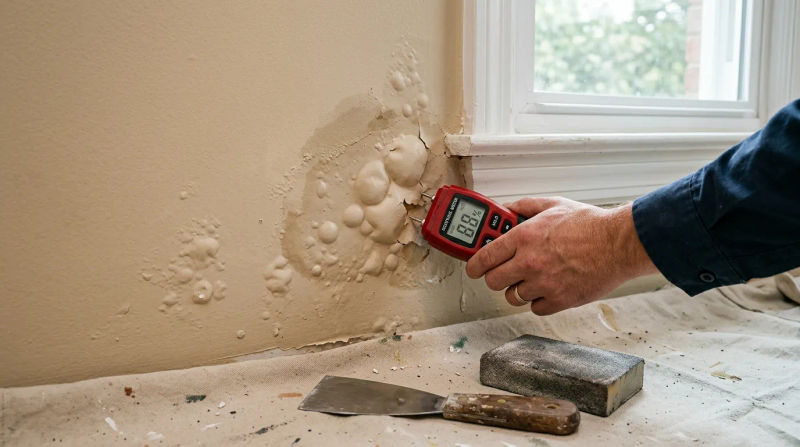
You’ve just finished a beautiful interior painting project, or perhaps the paint has been on the walls for a year or two. Everything looks perfect. Then, after a week of that heavy, humid September air we know so well here in Decatur, you spot them: small, pimple-like bubbles forming on the surface of your wall. Maybe it’s one large, sagging blister under a window. It’s a frustrating sight, and as a paint and finish specialist with over a dozen years of experience in the area, it’s a call our technicians receive frequently, especially as the late hurricane season brings storm-driven rain.
That fresh paint bubbling isn't just a cosmetic flaw; it's a signal. Your home is trying to tell you something is wrong. The good news is that by understanding what these signs mean, you can address the root cause and ensure your next paint job is the last one you’ll need for a long time.
Common Signs and Symptoms
Paint failure due to moisture can manifest in several ways. While bubbles are the most common sign, it’s important to know the different forms it can take. When our crews perform an inspection, we look for a range of symptoms to diagnose the underlying issue accurately.
- Blisters or Bubbles: These can range from small, pimple-like clusters to large, individual bubbles. They are pockets where the paint film has lost adhesion from the substrate (the drywall, plaster, or wood underneath) due to pressure from behind.
- Peeling or Flaking: This is often the next stage after bubbling. The paint film breaks, and the paint begins to peel away in strips or flake off in small pieces. If you see interior paint peeling moisture is almost always the culprit, and the back of the peeling paint or the wall beneath may feel damp.
- Cracking and Alligatoring: While sometimes caused by age, patterned cracking that looks like reptile scales (alligatoring) can be accelerated by moisture fluctuations that cause the surface to expand and contract.
- Soft or Spongy Spots: If you press on a bubble and it feels soft or squishy, there's likely liquid water trapped behind it. This is a major red flag that points to an active water source.
- Discoloration: Yellow or brown stains, known as surfactant leaching or water stains, often accompany moisture-related paint failure. These stains can be a clue that water is traveling through the wall assembly.
A few paint bubbles on drywall in Decatur, GA, might seem minor, but they are often the first visible sign of a larger, hidden problem.
What Causes This Problem
Paint is designed to form a durable, protective film. When that film fails, it's because something has compromised its ability to adhere to the surface. In almost every case of bubbling and peeling, the underlying cause is either moisture, a lack of preparation, or a combination of both.
1. Moisture: The Primary Culprit Moisture is the number one enemy of a lasting paint job. It can get behind the paint film from several sources:
- High Ambient Humidity: In our hot-humid Georgia climate, this is a major factor. Drywall and plaster are porous and can absorb moisture directly from the air. When the sun heats a wall, this trapped moisture turns into vapor and pushes outward, causing blistering paint humidity issues as it lifts the paint film.
- Direct Water Intrusion: This is more serious. A slow, hidden leak from the outside can saturate your wall cavity long before you see a puddle on the floor. In homes built during the 1990s and 2000s boom, we often see complex, multi-gabled rooflines. While architecturally interesting, these create numerous valleys and intersections where flashing can fail over time. A small breach around a window, chimney, or roofline can let storm-driven rain in, which then travels down inside the wall and causes paint to bubble and peel.
- Condensation: This is common in poorly ventilated areas like bathrooms, laundry rooms, and kitchens. When you take a hot shower, the warm, moist air condenses on the cooler surfaces of the walls. Over time, this repeated moisture exposure can work its way behind the paint.
- Plumbing Leaks: A slow drip from a pipe inside a wall can cause significant damage that first appears as a persistent paint bubble.
2. Improper Surface Preparation A paint job is only as good as the surface it’s applied to. Our crews spend more time on preparation than on painting itself because it is the most critical step for longevity.
- Painting on a Damp Surface: If a wall was recently exposed to a leak or is still holding onto ambient humidity, applying paint will trap the moisture. As it tries to escape, it will push the new paint right off the wall.
- Contaminants: Painting over grease, dust, soap scum, or even oils from fingerprints can prevent the paint from forming a strong bond. The surface must be thoroughly cleaned and allowed to dry completely.
- Failure to Prime: Primer serves two key functions: it ensures adhesion and blocks stains. Applying paint directly over a new drywall patch or a glossy old paint surface without priming is a recipe for failure. A high-quality bonding or moisture-blocking primer is essential for problem areas.
When to Call a Professional
So, you’ve found a bubble. Can you fix it yourself, or is it time to bring in experienced professionals? The answer depends on the scope and suspected cause of the problem.
You can likely handle it yourself if:
- You have one or two small, hard bubbles on an interior wall far from any water sources. This was likely caused by a minor application error or a speck of dust during the last paint job.
- The issue is minor condensation-related blistering in a bathroom, and you're confident you can improve ventilation with consistent exhaust fan use.
In these cases, the fix involves scraping the bubble, sanding the edges smooth, cleaning the area, applying a quality stain-blocking primer, and then repainting.
It's time to call a professional when:
- You see widespread paint bubbling across a large area or multiple walls. This indicates a systemic issue, not an isolated flaw.
- The bubbles are wet, soft, or accompanied by brown or yellow stains. This is a clear sign of an active water problem that must be traced to its source.
- The paint is peeling in large sheets, and the drywall underneath is damp, soft, or crumbling. The wall itself will need repair before any painting can happen.
- The problem reappears after you’ve attempted a DIY fix. This means the root cause was not addressed, and a professional diagnosis is needed.
An experienced painting contractor won't just scrape and paint. A thorough technician will use tools like a moisture meter to assess the wall's condition, identify the boundaries of the affected area, and help you determine if the source is humidity, condensation, or an external leak that may require a roofer or plumber.
Conclusion
Think of bubbling and peeling paint as a diagnostic signal from your home. While it’s tempting to just scrape it away and apply a fresh coat, you’ll likely be repeating the process in a few months. The key is to investigate and resolve the underlying cause first.
Addressing interior paint peeling moisture issues early is crucial. What starts as a cosmetic annoyance can be an early warning of more significant problems like mold growth, wood rot, or structural damage. By taking these signs seriously, you protect not just your paint job, but the health and value of your entire home.
If you notice any of these signs, contact a local Painting professional for an inspection. They have the expertise and tools to properly diagnose the problem and recommend a lasting solution.